Description of the 200 CAD Gold Coin Transcendence and Tranquility 2024
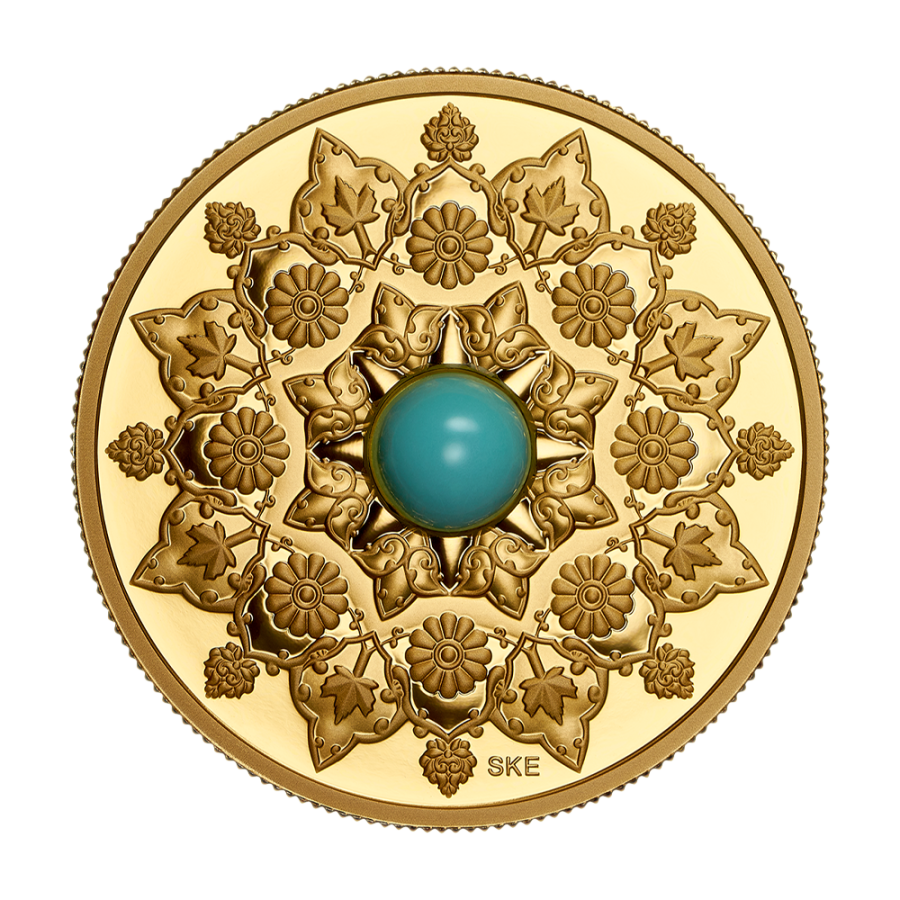
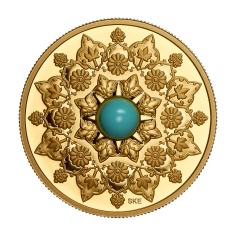
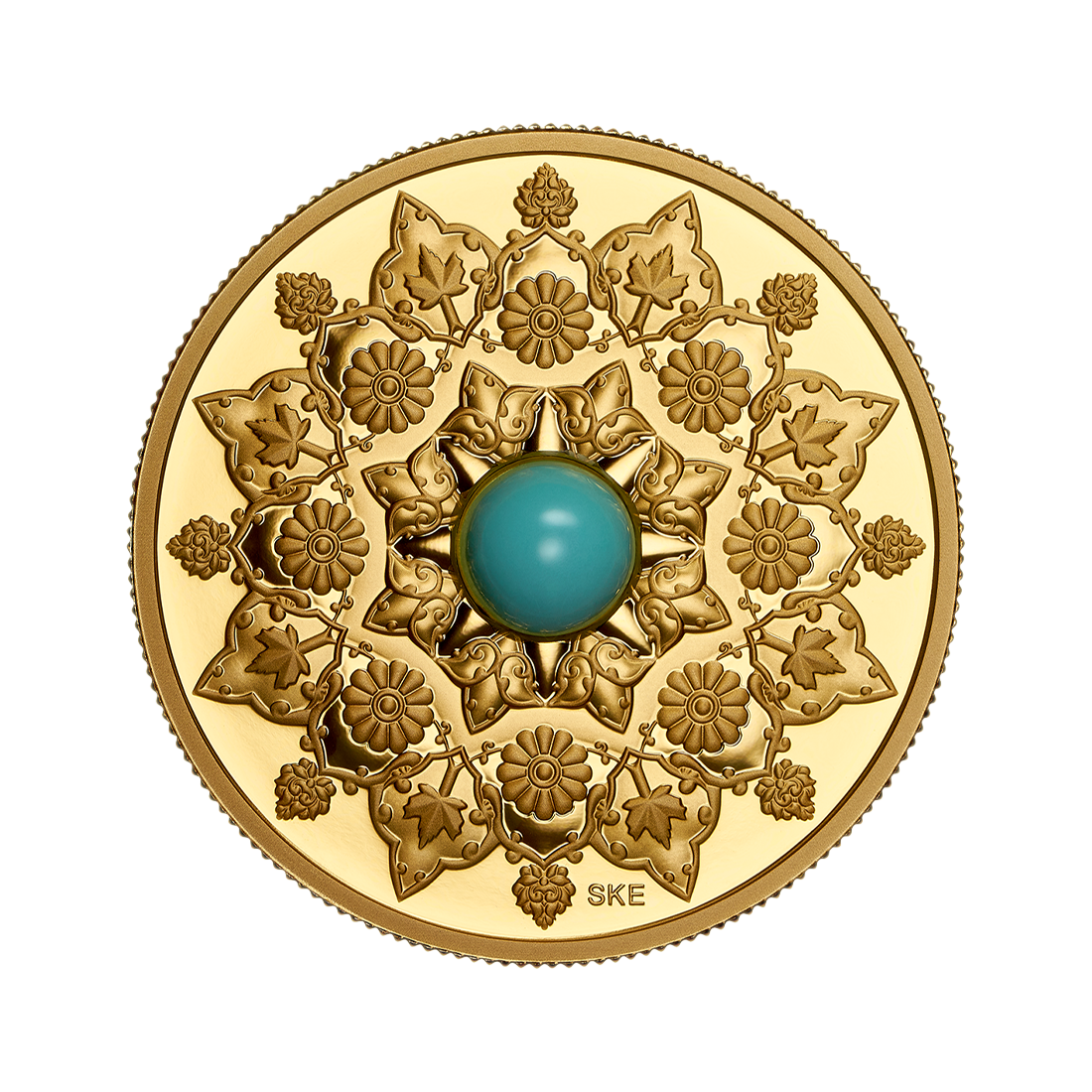
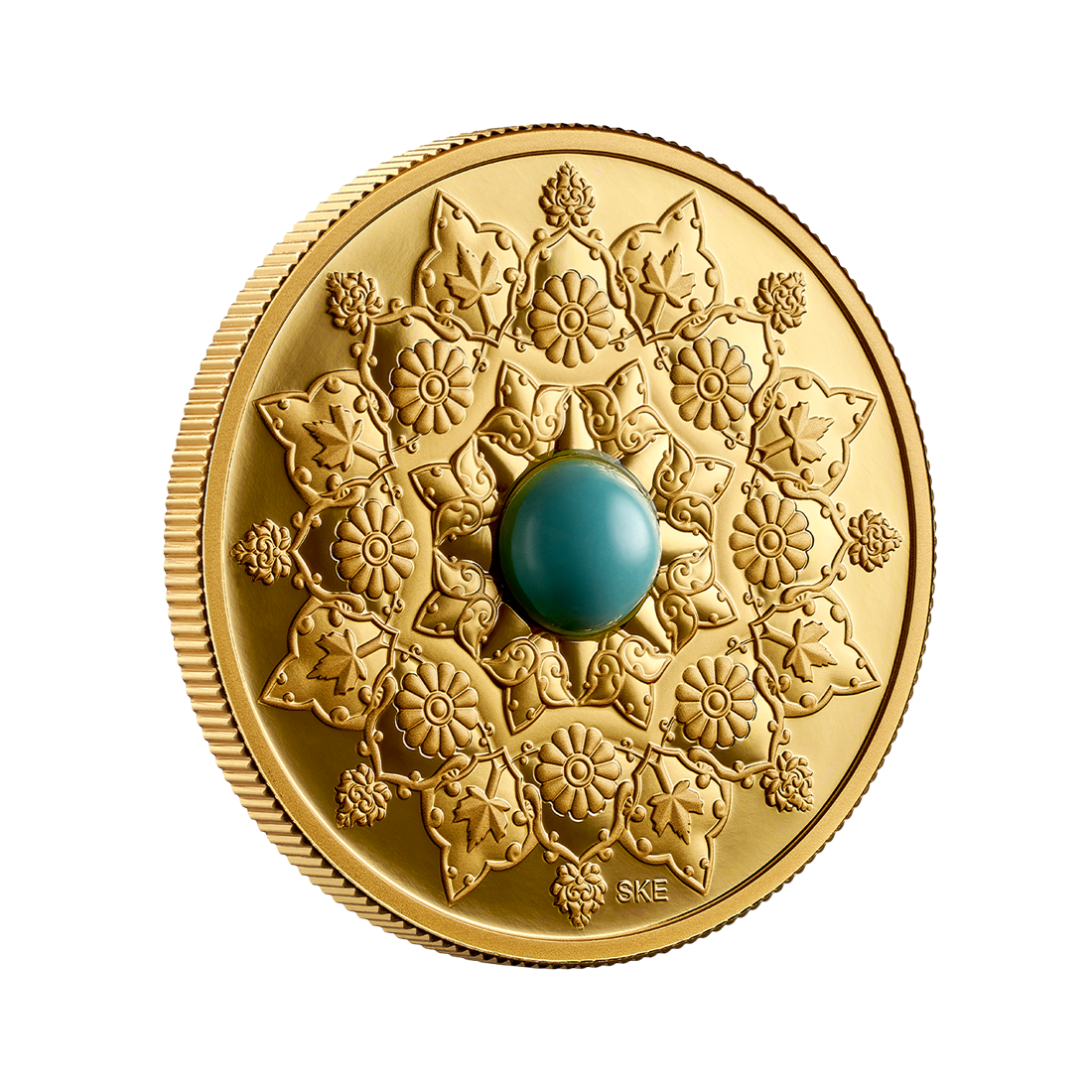
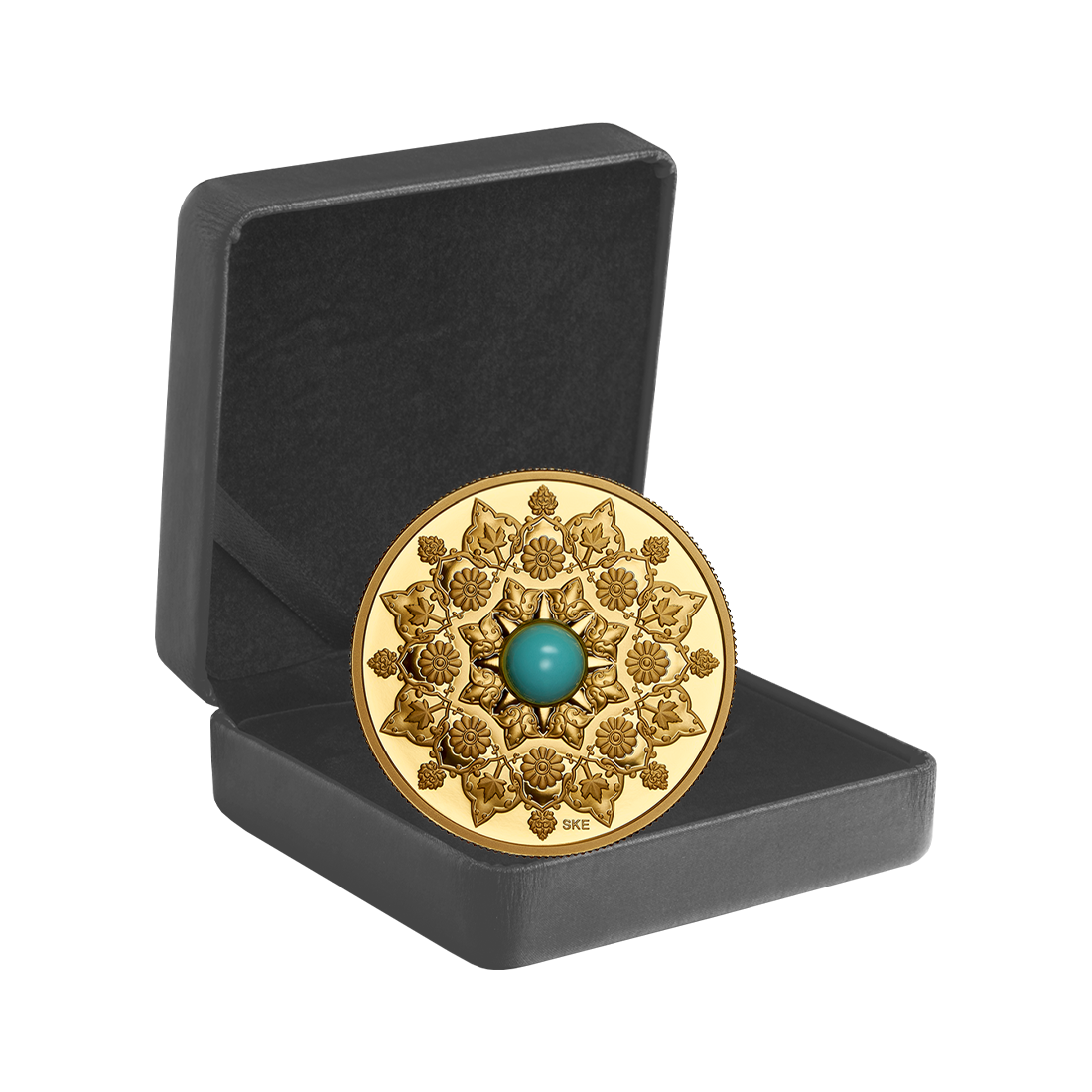
This gold coin, with a purity of 999.9 and a weight of one ounce, belongs to the fifth series in the Mint's Celebrating Canada's Diversity cycle and was minted by the Royal Canadian Mint. Adorned with a turquoise gemstone, its style draws on Iranian cultural traditions. These include shapes imitating carpet patterns, lotus flowers inspired by bas-reliefs in Persepolis, and the distinctive paisley pattern representing teardrops. Stylized maple leaves symbolize Canadian identity. This coin highlights the cultural and historical diversity of Canadian society.
Appearance of the 200 CAD Gold Coin Transcendence and Tranquility 2024
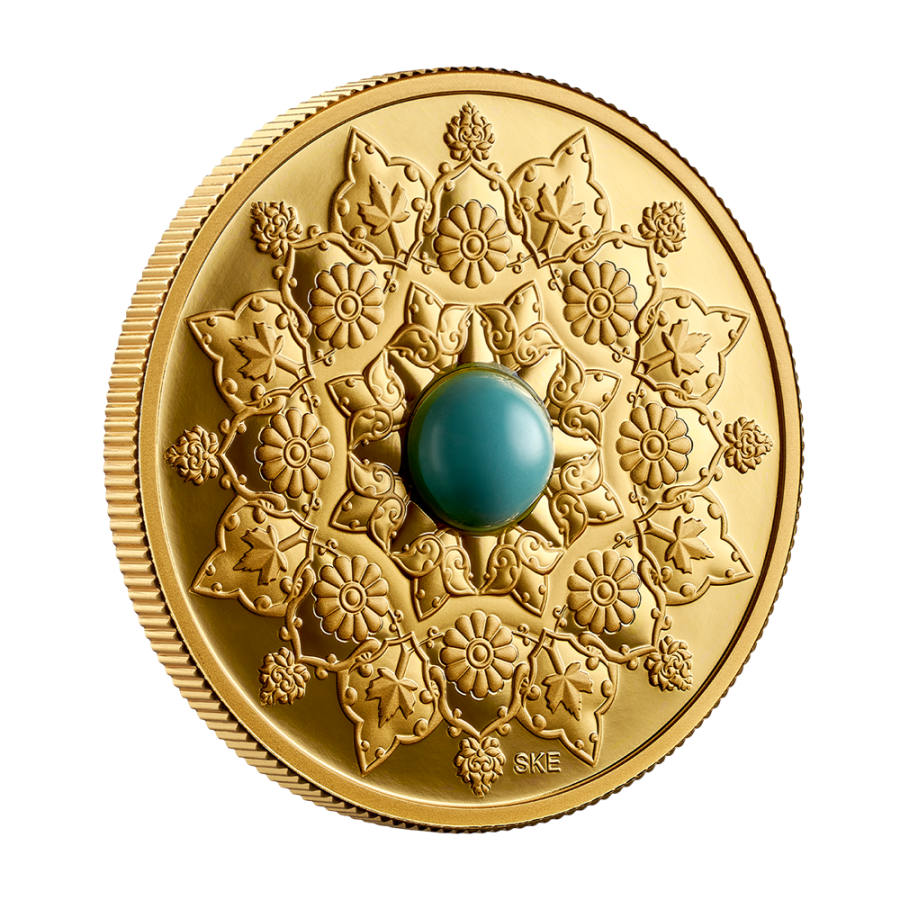
The reverse of the coin, designed by Canadian artist Soheila Esfahani, who grew up in Tehran (Iran), features a turquoise gemstone surrounded by engraved patterns that emphasize the cultural heritage of Iranian Canadians. While the paisley motif surrounds the central gemstone element, the maple leaf—symbolizing Canadian identity—and the lotus flower—inspired by bas-reliefs in Persepolis—form a circular pattern. The reverse also includes the Shah Abbasi floral motif and Eslimi patterns from traditional carpet designs.
All these elements come together, and the balanced symmetry and moving symbolism aim to inspire and encourage us to transcend limitations and find inner peace and tranquility.
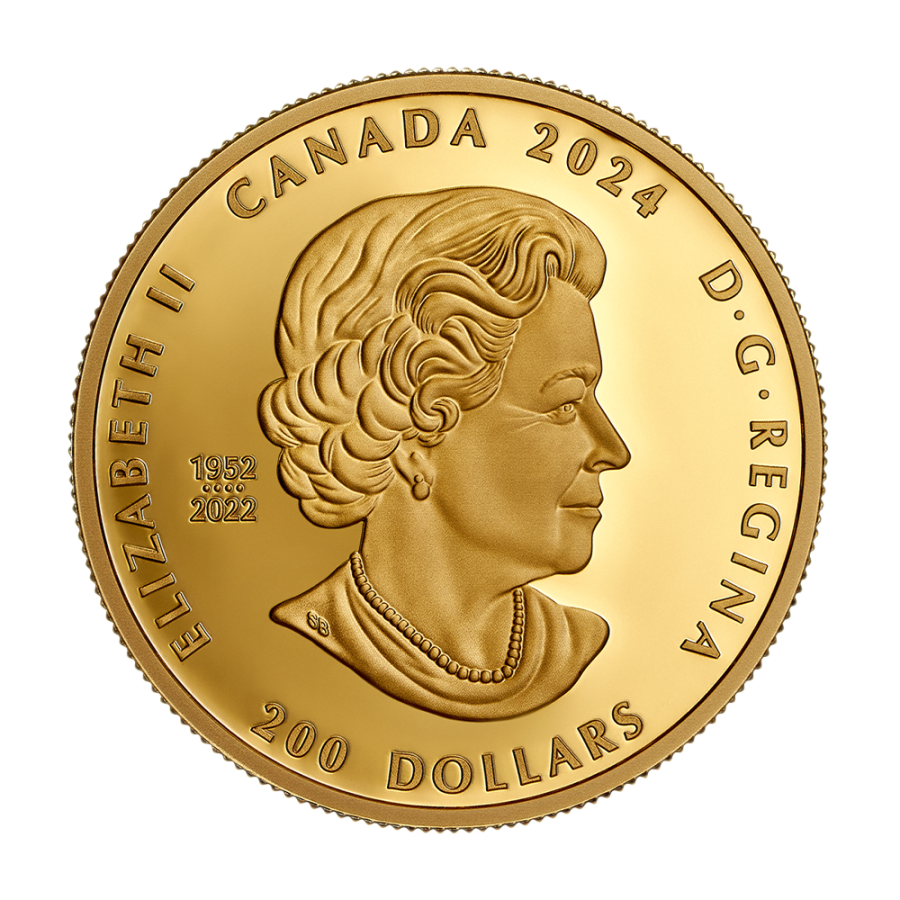
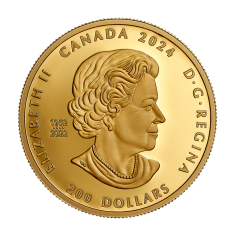
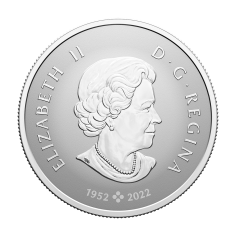
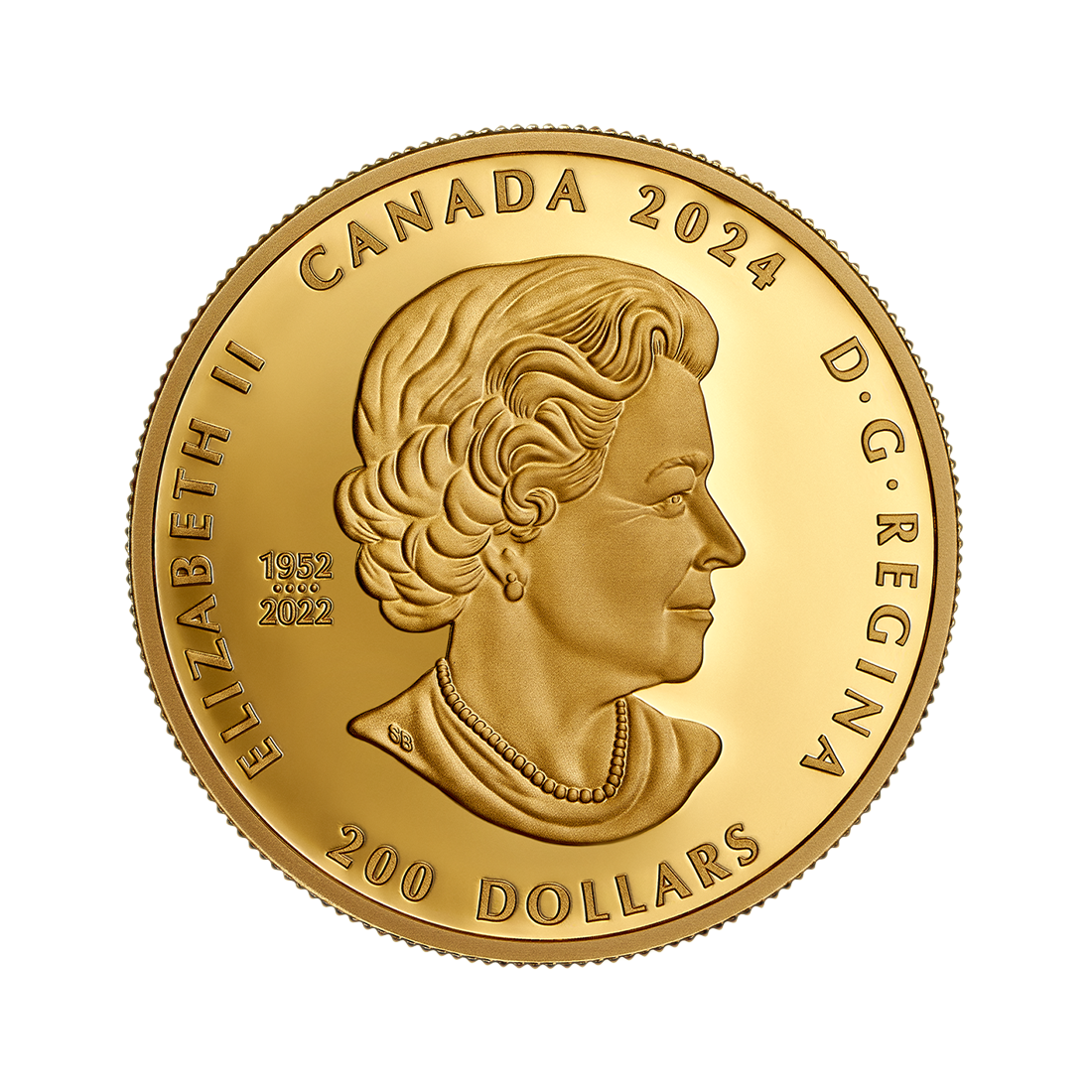
The obverse of the coin features the effigy of Queen Elizabeth II by Susanna Blunt. It has a special marking that includes four pearls symbolizing the four portraits that have adorned Canadian coins throughout the Queen's reign.
Historical Background
Turquoise has deep historical connections with Iranian culture, art, and even architecture. Ancient Iranians called it piruzeh, meaning "victory," and believed it provided protection. In today's Iran, which remains an important source of this blue-green gem, turquoise artifacts thousands of years old have been discovered at archaeological sites. In many parts of the country, especially at local bazaars, beautiful handicrafts adorned with turquoise—such as necklaces, bracelets, and earrings—can be found.
According to 2021 data, 213,160 people born in Iran lived in Canada, of whom 70,395 immigrated to Canada since 2011. The vast majority of them live in the northern suburbs of Toronto. It is worth knowing that in the Western world, Iran was known as Persia. In 1935, on Nowruz, Reza Shah Pahlavi asked foreign delegates to use the term Iran, the name of the country used since the time of the Sasanian Empire. Since then, the word Iran has become more common in Western countries.
Manufacturer
With Canada's growing independence from Britain, the need to mint its own coins also increased. Therefore, in 1908, the Royal Canadian Mint was established and has since become one of the most important mints in the world. To this day, all coins from the Royal Canadian Mint bear the portrait of the reigning British monarch.
The Mint's shares are held in trust for the Crown of Canada.
The Mint produces all Canadian circulation coins and is involved in designing and crafting collectible coins from precious metals—gold, silver, palladium, and platinum bullion coins, medals, as well as medallions and tokens. It also offers gold and silver refining services.
Today, the Royal Canadian Mint sets standards in the field of minting technology and numismatic design, which reflects its position and reputation.




 801 501 521