Description of the Silver Coin Ignacy Jan Paderewski (1860-1941)
The coin was issued to commemorate the memory of the Polish composer and prominent political activist - Ignacy Jan Paderewski. This silver collector's item, with a metal purity of 0.925 from 2011, is an elegant value and an interesting addition to any collection.
Appearance of the Silver Coin Ignacy Jan Paderewski (1860-1941)
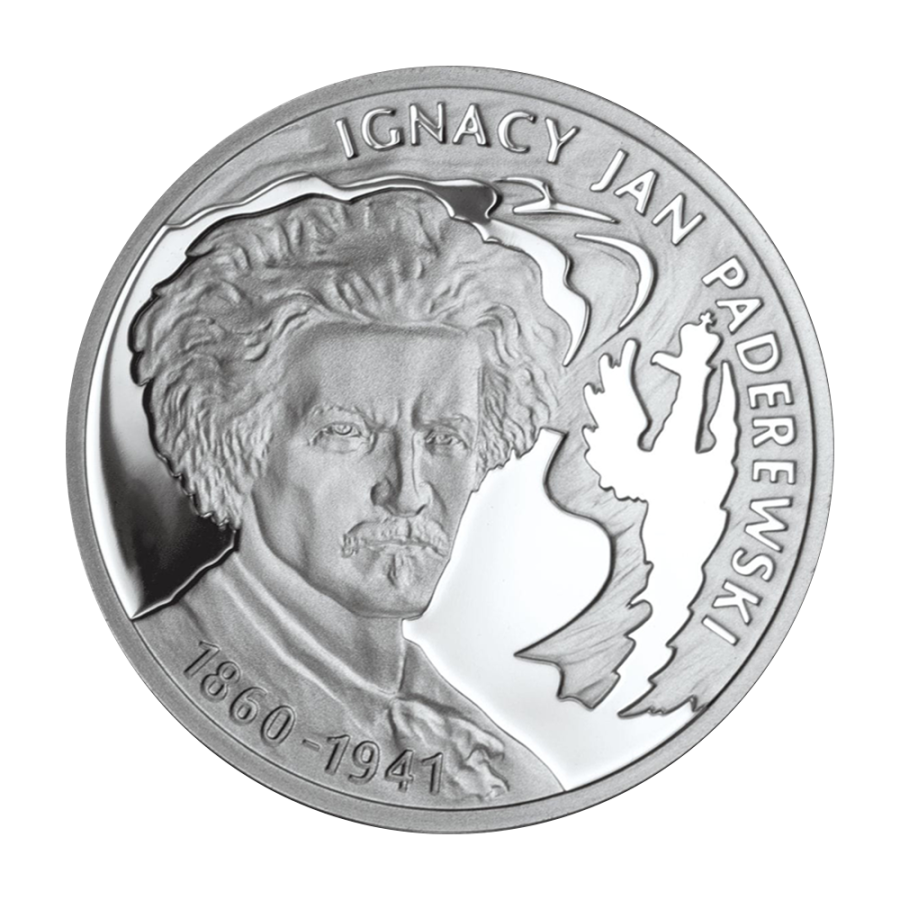
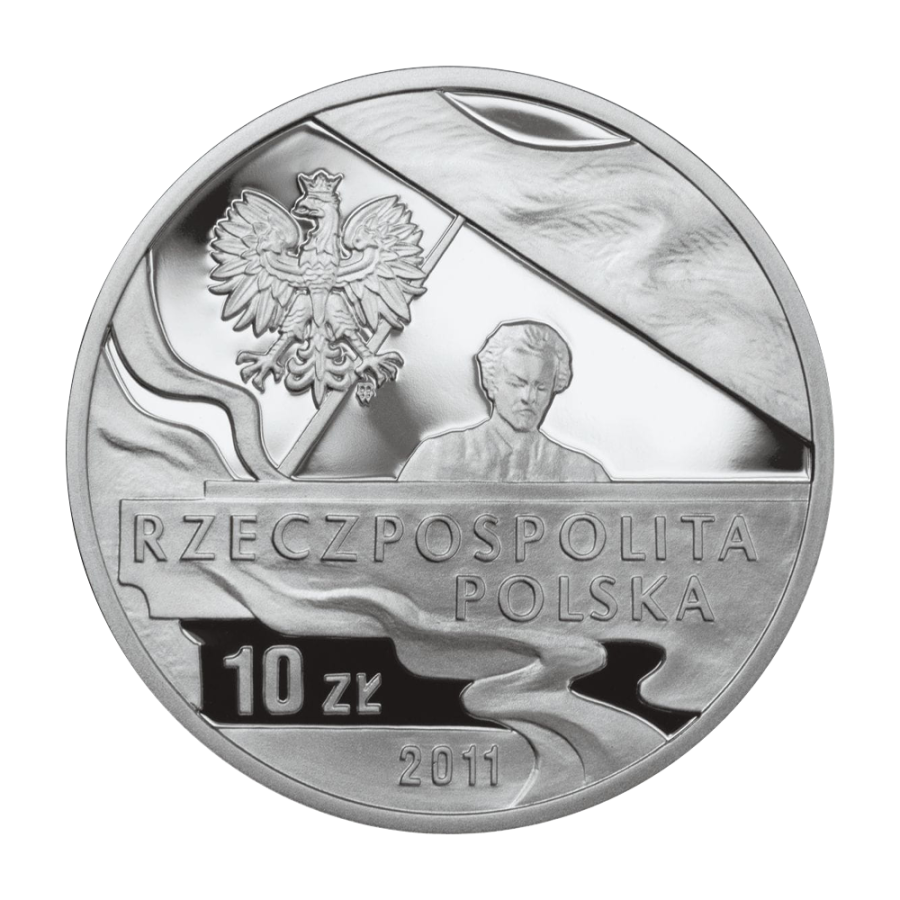
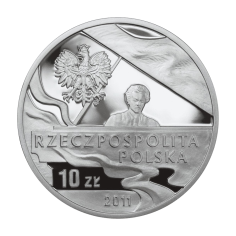
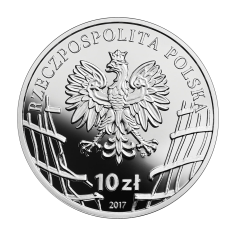
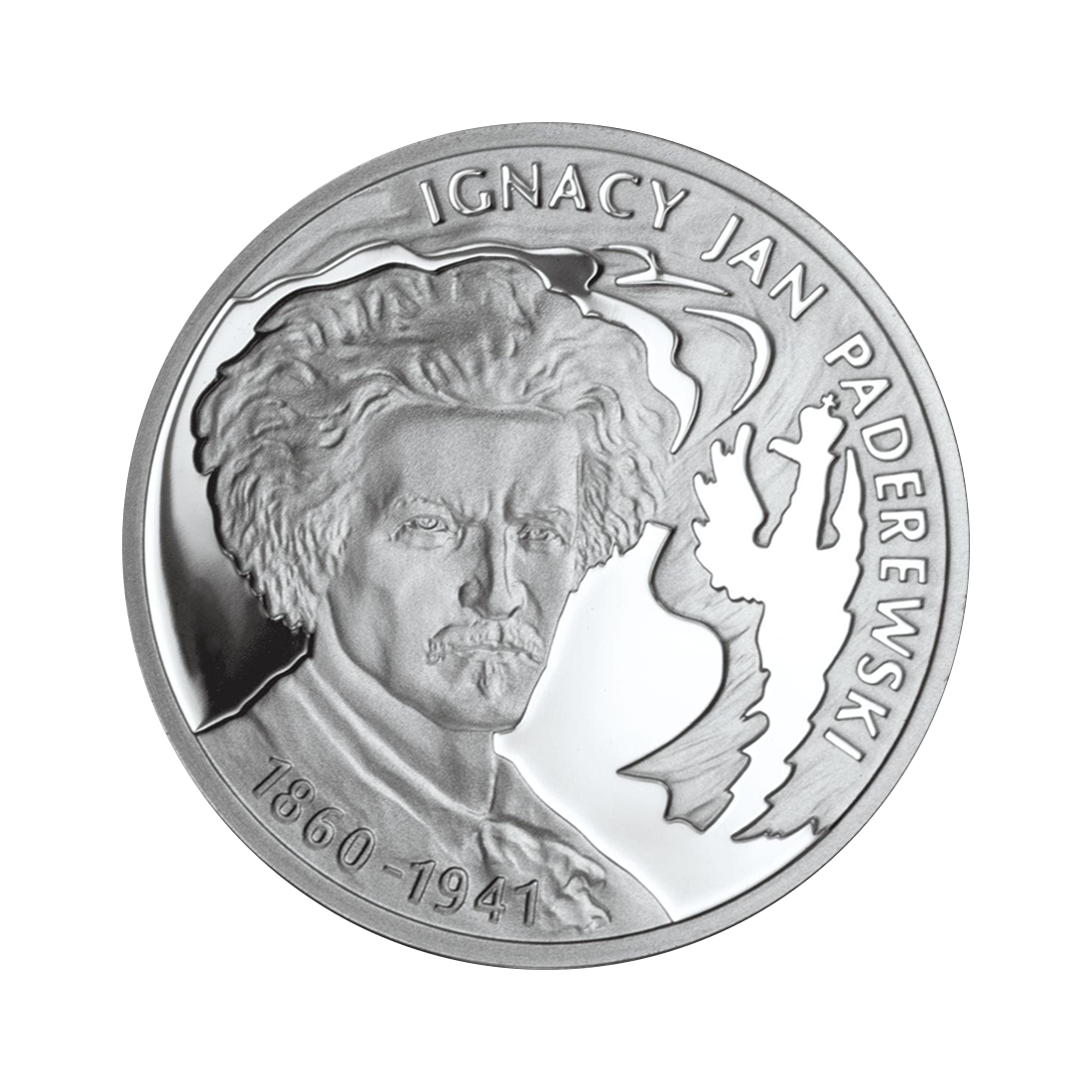
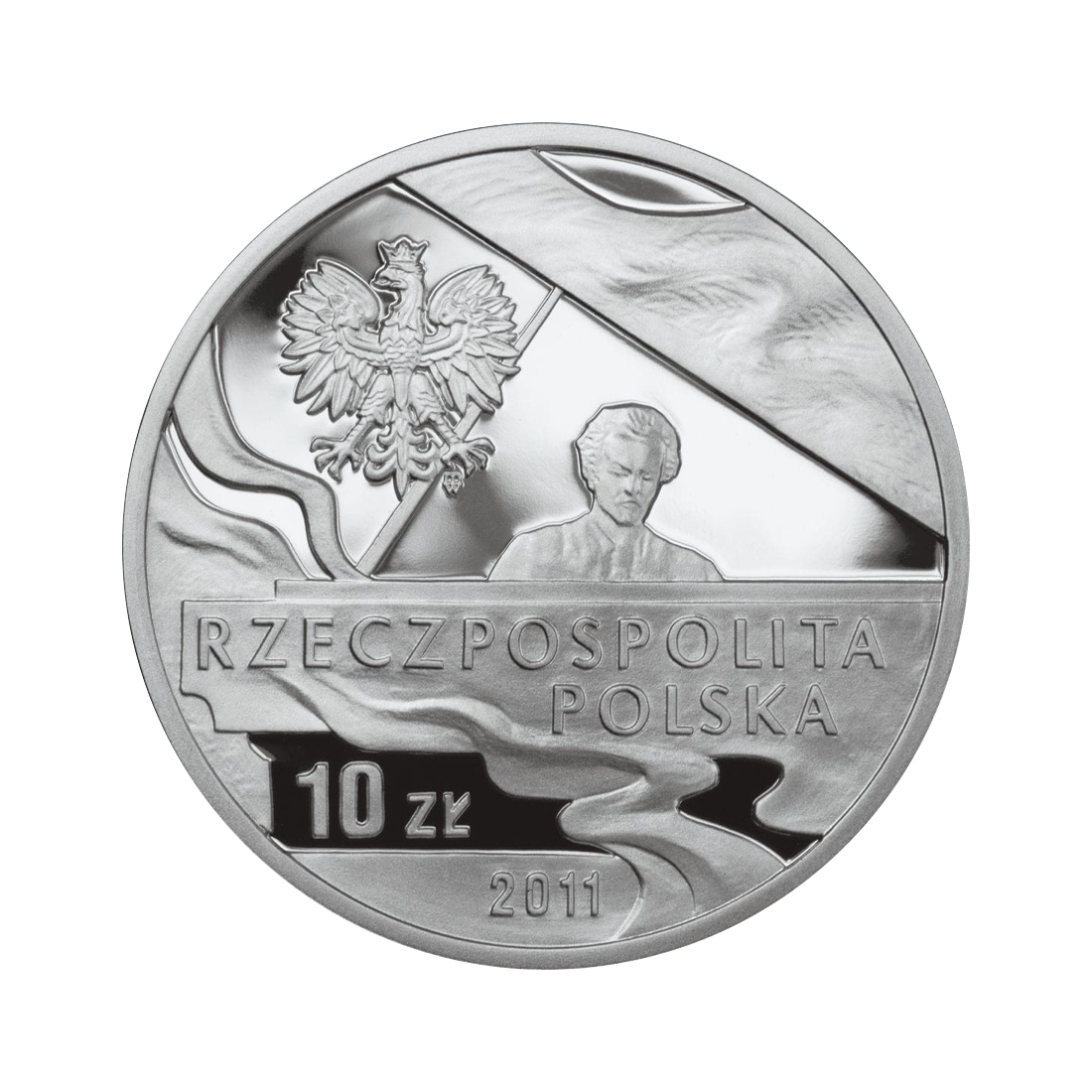
On the reverse of the silver coin, there is a stylized depiction of the bust of Ignacy Jan Paderewski. On the right side, an image of an eagle is placed, referencing the coat of arms of the Republic of Poland introduced in 1919. At the top of the coin, in a semicircular form, is the inscription: IGNACY JAN PADEREWSKI. At the bottom, on the left side, against the background of the bust of Ignacy Jan Paderewski, there is another semicircular inscription: 1860-1941. On the obverse of the coin, there is a stylized image of Ignacy Jan Paderewski playing the piano. Below the image is the inscription: RZECZPOSPOLITA POLSKA, and at the very bottom, the year of issue is placed: 2011. Above, on the left side of the coin, is the inscription: 10 zł. One can also see the image of an eagle, which is the emblem of the Republic of Poland.
Historical Outline
Ignacy Jan Paderewski is a multi-talented figure, an icon in both music and the political sphere. Born on November 18, 1860, in Kuryłówka, he was a renowned pianist, composer, and conductor, as well as an active social and political activist. His musical talent was unparalleled, and his interpretations of Chopin's works gained him international fame. Paderewski performed on the world's greatest stages, enchanting audiences with his virtuosity and exceptional musical sensitivity. However, he did not only achieve success in music. He was also involved in the fight for Poland's independence. After World War I, at the time when Poland regained independence, he became one of the key politicians and diplomats. His contribution to the peace talks and the signing of the Treaty of Versailles contributed to Poland gaining independence. After retiring from public life, Paderewski returned to music, continuing his concerts and working for various cultural initiatives. His life and activities remain an inspiration for future generations of artists and social activists, and his contribution to the history of Poland and the world is unforgettable.




 801 501 521