Description of the 200 Zlotych 2012 100th anniversary of Boleslaw Prus`s death - 24h Shipping!
The coin dedicated to Bolesław Prus was issued by the Polish Mint as part of a series commemorating outstanding Polish writers. It is an expression of recognition for one of the most prominent creators of Polish positivist literature, the author of works such as "Lalka" and "Faraon," which have become a permanent part of the national literary canon. Bolesław Prus, in reality, Aleksander Głowacki, not only created excellent psychological and social portraits in his novels but also actively participated in public life as a journalist and commentator. The issuance of the coin is both a collector's and educational endeavor, reminding us of Prus's intellectual legacy and his contribution to the development of culture and social awareness in Poland at the turn of the 19th and 20th centuries. The coin is minted in gold and has a limited mintage, making it not only a valuable carrier of memory about the writer but also a unique specimen for collectors and history enthusiasts.
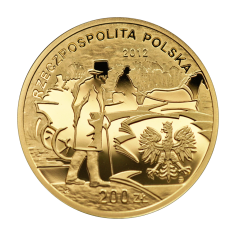
Appearance of the 200 Zlotych 2012 100th anniversary of Boleslaw Prus`s death - 24h Shipping!
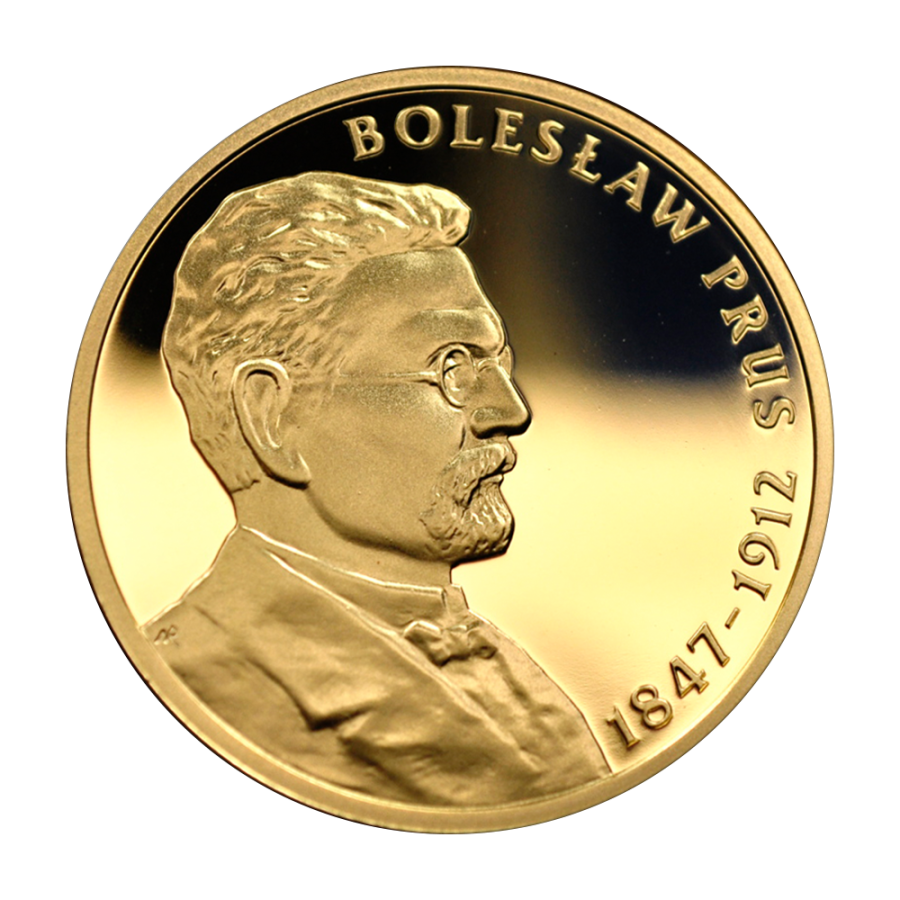
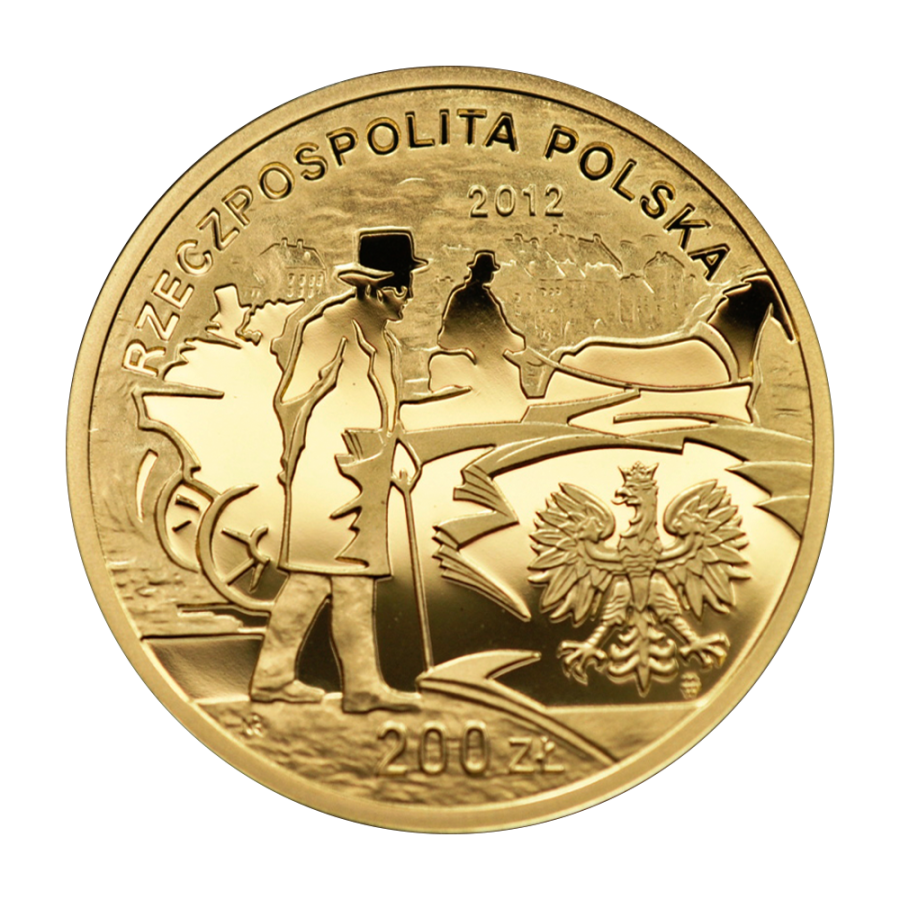
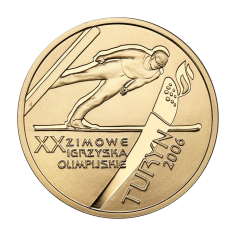
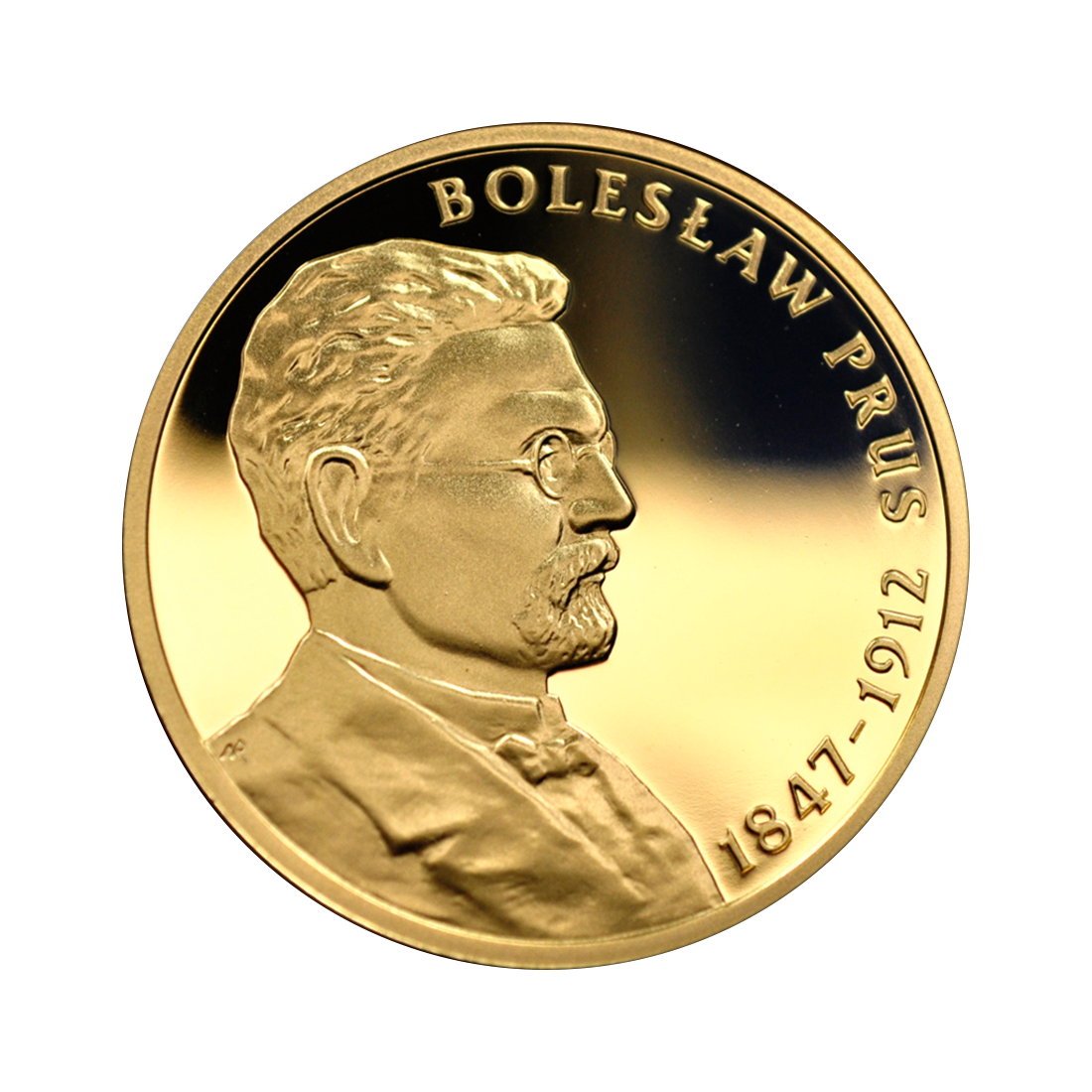
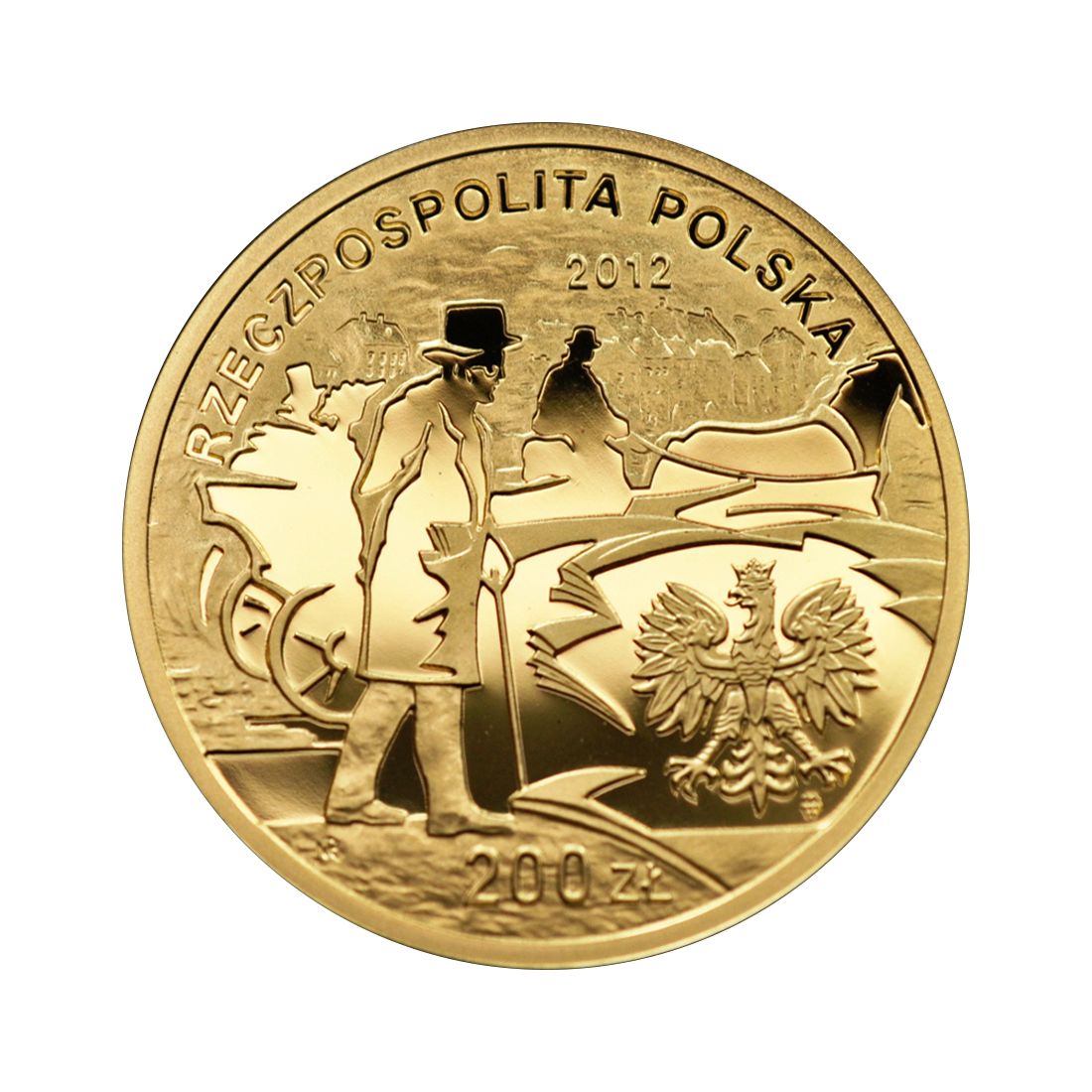
The coin is made of gold and features a proof finish. The reverse of the coin depicts the image of Bolesław Prus, the writer shown in profile, with characteristic facial features and carefully reproduced details. Next to the portrait, there is a facsimile of the author's signature and the dates of his life: 1847–1912. The entire design is surrounded by a stylized, elegant ornament, giving the coin a classic, timeless character. The obverse of the coin features the emblem of the Republic of Poland – an eagle with a crown on its head. Around it, the inscription RZECZPOSPOLITA POLSKA, the denomination, and the year of issue are placed. The entire design is distinguished by a high level of aesthetics and precision, emphasizing both the stature of the figure and the numismatic value of the coin.
Historical Background
Bolesław Prus, actually Aleksander Głowacki (1847–1912), was one of the most outstanding representatives of Polish positivism – a literary movement that developed after the fall of the January Uprising, during the partitions. As a participant in this uprising at a young age, Prus experienced the tragic consequences of independence struggles firsthand, which influenced his later views and work. Instead of calling for further uprisings, he became an advocate of organic work, education, and social progress.
He was actively involved as a journalist and columnist, particularly in the "Kurier Warszawski," where he published his observations on social life, politics, and customs for years. His texts, written in an accessible language, often contained deep reflections on the condition of Polish society under the partitions. In literature, he became famous as the author of novels with a strong psychological and socio-moral charge. The most famous of these are "Lalka" – a panoramic view of Warsaw society in the second half of the 19th century, and "Faraon" – a deep analysis of the mechanisms of power set in the realities of ancient Egypt, which is also a timeless allegory. Prus's work is characterized by deep humanism, faith in progress, and at the same time skepticism towards illusions and prejudices.
The coin commemorating Bolesław Prus was issued on the 100th anniversary of his death, in 2012, as a tribute to the writer who significantly influenced the shaping of modern national consciousness in Poland through his intellectual and artistic activity. It is a symbol of remembrance of a creator who understood and described social changes with exceptional insight and empathy.




 801 501 521