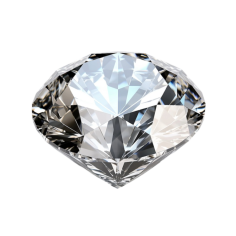
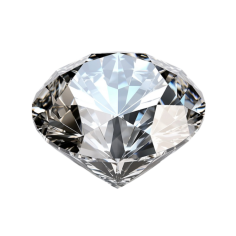
Laboratory diamonds, also known as synthetic, cultivated, or man-made diamonds, are real diamonds that are created not deep beneath the Earth’s surface but in advanced, technologically controlled conditions. Thanks to groundbreaking methods such as HPHT (High Pressure High Temperature) and CVD (Chemical Vapor Deposition), it is possible to produce stones with an identical crystal structure, chemical composition, and optical and physical properties as natural diamonds.
Unlike mined diamonds, laboratory-created diamonds are produced in a sustainable way, without harming the environment and without ethical controversies, making them an increasingly desirable and conscious alternative in the world of gemstones.
How are laboratory diamonds created? – HPHT and CVD methods
The process of creating laboratory diamonds is a technological marvel that replicates or even refines nature itself.
1. HPHT Method – High Pressure High Temperature
This method reproduces the conditions found deep within the Earth’s mantle. A small diamond fragment (called a seed) is placed in a specialized press surrounded by pure graphite (carbon). It is then subjected to extremely high pressure (over 5 GPa) and temperature (around 1500°C). Under these conditions, carbon atoms crystallize on the seed, forming a larger, raw diamond with a regular structure.
2. CVD Method – Chemical Vapor Deposition
The CVD method resembles atomic “3D printing.” A thin slice of diamond is placed in a vacuum chamber filled with carbon-rich gases (e.g., methane). Under the influence of microwaves, the gases break down, and carbon atoms settle layer by layer on the diamond, enlarging it. This process allows precise control of crystal growth and results in diamonds of very high clarity.
Both methods make it possible to produce diamonds with a hardness of 10 on the Mohs scale, meaning they are just as durable and scratch-resistant as natural stones.
4C – the same highest evaluation standard
Both laboratory and natural diamonds are evaluated according to the same strict 4C criteria established by the Gemological Institute of America (GIA):
- Carat (Weight) – the mass of the stone, expressed in carats (e.g., 1 ct = 0.2 g).
- Cut – the quality of the cut, which determines the diamond’s brilliance and sparkle.
- Clarity – the degree to which the stone is free from internal inclusions.
- Color – the hue of the diamond, ranging from perfectly colorless (D) to slightly yellowish.
Thanks to certification by leading institutions such as GIA and IGI, each laboratory diamond has a unique identification number laser-engraved on its edge, confirming its authenticity, parameters, and origin, ensuring full transparency of the purchase.
Can a laboratory diamond be distinguished from a natural one?
To the naked eye – no. Even for an experienced jeweler or gemologist, distinguishing a laboratory diamond from a natural one without specialized equipment is impossible. Both stones have an identical appearance and properties. The differences can only be detected in advanced gemological laboratories that analyze subtle crystal growth patterns and trace elements.
#BBD0E0 »




 801 501 521